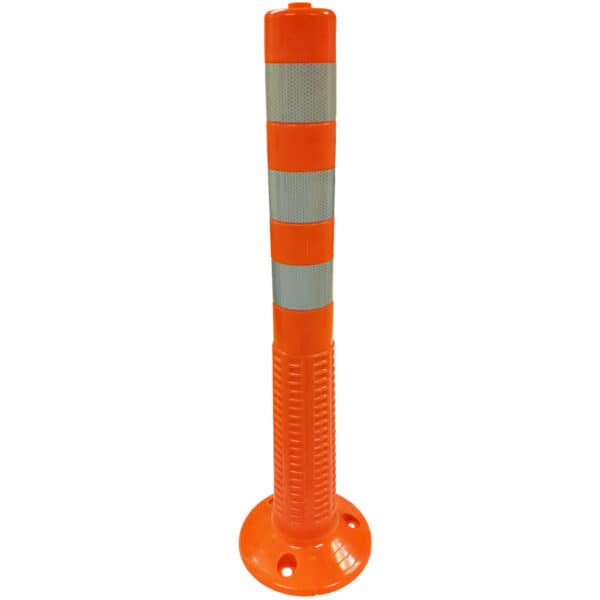

Description
Spring Post is a non-rigid road marker used to visibly guide traffic, mark temporary hazards, delineate lanes, and restrict vehicular access. Unlike fixed bollards, the spring post is mounted on a flexible base (often incorporating rubber or industrial plastic springs) that allows it to be run over by a vehicle without being permanently damaged or damaging the vehicle’s bodywork or tires. This makes them ideal for zones where accidental impact is common, such as parking entries, lane merges, and construction buffer zones
Features:
- Spring Base Mechanism: The core feature is the flexible, hinged base, which uses highly resilient rubber, polymer coils, or internal springs. This mechanism allows the post to be deflected up to and then immediately snap back to its original vertical position, ensuring continuous delineation.
- Impact Resistance: Engineered to withstand repeated minor vehicle impacts without permanent deformation, offering a low-maintenance solution compared to fixed barriers.
- Vehicle Safety: Because the post is designed to flex, it minimizes potential damage, scuffing, or scratching to impacting vehicles
- High Visibility Color: Posts are typically manufactured in bright, safety colors like Fluorescent Orange, Yellow, or Red for maximum daytime visibility.
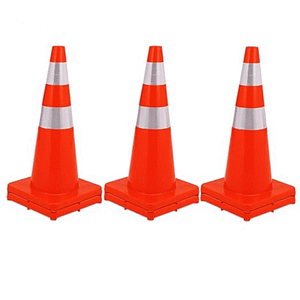
- Retroreflective Bands: Features one or more high-intensity reflective bands (usually white or silver) that use micro-prismatic technology to reflect vehicle headlights, ensuring excellent visibility at night or in low-light conditions.
- Weather Tolerance: Designed for all-weather use, maintaining its structural and color integrity through extreme temperatures and exposure to common road chemicals like oil and salt.
- Simple Mounting: Easily installed via heavy-duty bolts or anchors directly into asphalt or concrete surfaces. The base is often pre-drilled for quick deployment
- Lightweight : The post is light enough for easy transport and installation, yet stable enough due to its mounting base to resist high winds.
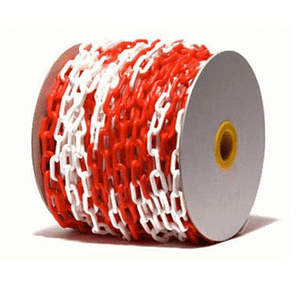
- T-Top: Posts may include a T-handle top designed to accept caution tape or plastic safety chain to create a continuous, connected barrier.