
Description
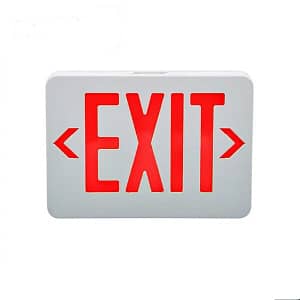
Exit Light is a legally mandated, illuminated directional fixture designed to clearly and unambiguously mark the nearest egress (exit) route out of a building or structure. These devices are critical components of a building’s life safety system, ensuring that occupants can quickly and safely evacuate during emergencies such as fires, power outages, or natural disasters, especially when visibility is low. Exit lights are essential in all commercial, industrial, public, and multi-unit residential buildings and are governed by strict building codes and fire safety regulations.
Features:
- Illuminated Signage: The primary feature is internal illumination, ensuring the sign is visible even in pitch darkness or smoke-filled environments.
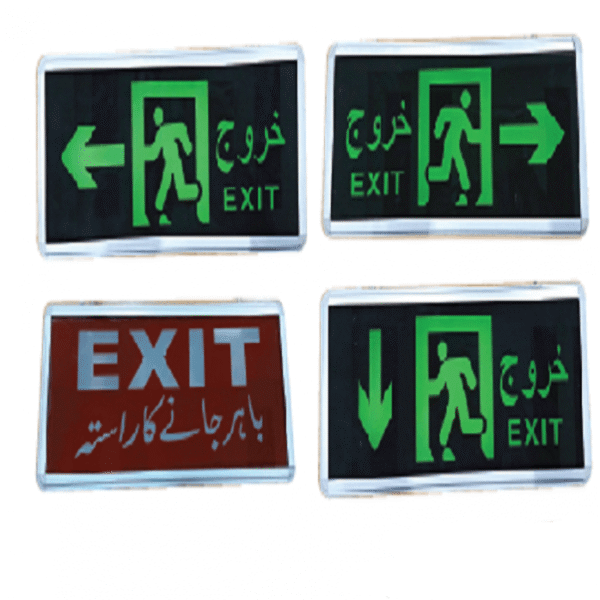
- High-Visibility Lettering: Features the word “EXIT” an equivalent international pictogram of a running person) in large, clear, capital letters.
- Primary Power: Connected directly to the building’s electrical system.
- Emergency Power: Equipped with an internal, rechargeable battery backup (usually Nickel-Cadmium or Lithium-ion) that automatically activates when the main power fails. This backup must sustain illumination for a minimum required duration (typically 90 minutes).
- Durable Housing: Constructed from durable, fire-resistant materials, such as thermoplastic or metal (steel/aluminum), to withstand high temperatures and maintain integrity during an emergency
- Self-Testing Capability (Modern Units): Many modern signs feature self-diagnostic systems that automatically test the battery and lamp function periodically, alerting facility management to required maintenance via visual indicators
- Emergency Egress Guidance: The fundamental purpose is to guide occupants quickly and safely to the nearest means of escape during an emergency, reducing panic and preventing overcrowding.
- Code Compliance: Ensures the building meets stringent local, national, and international fire and life safety codesIncreased Safety: The illumination cuts through darkness and smoke, which is often the primary cause of disorientation during a fire or power outage.
- Reduced Liability: Proper installation and maintenance demonstrate due diligence in protecting occupants