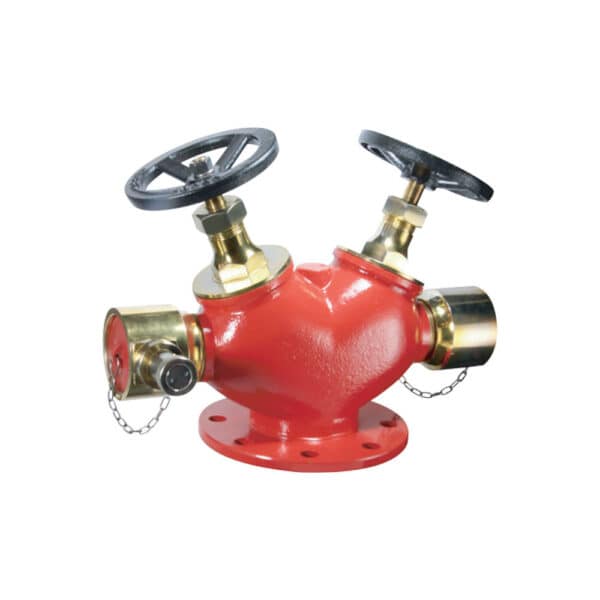

Description
Double-Headed Hydrant Valve, also known as a Two-Way Landing Valve or twin-headed hydrant valve, is an essential water control device for building fire safety systems across Pakistan. Designed to connect fire hoses to a pressurized water supply, it provides two independent outlets for firefighters to rapidly deploy multiple hose lines, significantly enhancing their ability to combat large or spreading fires in commercial buildings, industrial complexes, and high-rise structures.
Features:
- Dual Outlets with Independent Control: Features two separate hose outlets, each controlled by its own handwheel valve. This allows two fire hoses to be connected and operated simultaneously or independently from a single valve unit.
- High-Volume Water Delivery: Engineered to efficiently handle and deliver high volumes of pressurized water from a building’s internal standpipe system or external fire mains.
- Durable Cast Iron / Brass Construction: The main body is typically cast from robust materials like ductile iron (painted red for visibility) or high-grade brass, ensuring exceptional strength, longevity, and resistance to corrosion and high pressure. Internal components are usually brass.
- Standardized Hose Connections: Equipped with standardized male outlets (e.g., British Standard Instantaneous, threaded, or Storz, depending on regional standards in Pakistan) to ensure seamless compatibility with fire hoses used by local fire brigades.
- Flanged Inlet Connection: Designed with a sturdy flange at the base for secure and leak-proof mounting onto a standpipe or fire main, ensuring stable installation.
- Non-Rising Spindle Operation: The handwheel mechanisms operate non-rising spindles, indicating valve status clearly and reliably, allowing for quick opening and closing.
- Security Cap/Chain: Often includes caps with chains for each outlet to protect threads and prevent tampering or debris entry (visible in image).